
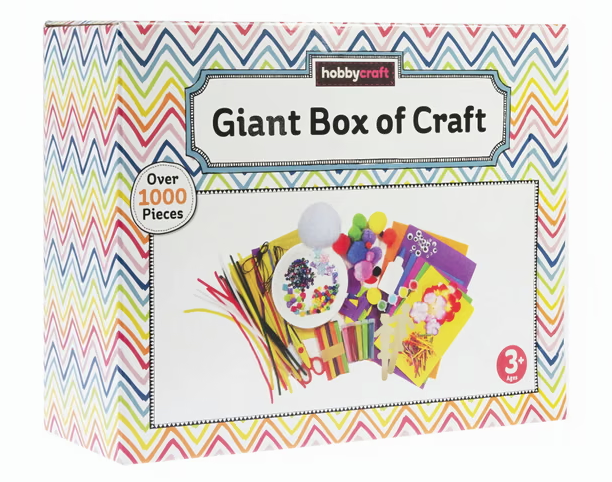
In a story that has sent shockwaves through the UK parenting community, Hobbycraft recently faced intense scrutiny following reports of asbestos contamination in its children’s products. According to The Guardian, the retailer was forced to withdraw its “Giant Box of Craft” from shelves after a concerned parent discovered that the included vials of coloured sand contained traces of hazardous asbestos.
The Hobbycraft Recall: What Happened?
The alarm was first raised by a parent who noticed similarities between the Hobbycraft sand and products previously recalled in Australia and New Zealand. After taking the initiative to have the sand tested at an independent lab, the results were startling: three out of five colours tested positive for fibrous tremolite asbestos.
While the health risk from such small quantities is generally considered low, UK law is clear: there is no safe limit for asbestos exposure. Asbestos is a known carcinogen, and the thought of it being in a product designed for children is understandably distressing for many families.
Why You Shouldn’t Rely on Labels Alone
One of the most concerning aspects of this story is the origin of the product. The affected sand was manufactured in China, where regulations allow products containing less than 0.1% or 0.5% asbestos to be labeled as “asbestos-free” in certain contexts. In the UK and Europe, however, the standards are much stricter. This discrepancy means that even products that appear safe on the label could potentially harbor dangerous fibers.
How to Protect Your Family: Professional Testing
If you have play sand at home—whether from Hobbycraft or another source—and you are feeling uneasy, you don’t have to wait for a government recall to get answers. You can take matters into your own hands by using a professional testing kit.
For materials like play sand, powders, or paints, the IVARIO Asbestos Test for Special Materials (Materialgroup 2) is the ideal solution. This specific test is designed to detect fibers in complex materials that aren’t part of standard building structures, providing parents and homeowners with the peace of mind they need.
Why SEM Analysis is Superior to PLM
When choosing a test, the technology used in the laboratory is critical. Many standard labs use PLM (Polarized Light Microscopy). While PLM is a common method, it has limitations, particularly when it comes to very thin or small fibers that can be hidden within the texture of sand or dust.
IVARIO utilizes SEM analysis (Scanning Electron Microscopy). Here is why that matters:
- Higher Accuracy: SEM uses an electron beam rather than light, allowing it to “see” much smaller fibers that PLM might miss.
- Greater Sensitivity: SEM can detect asbestos concentrations at much lower thresholds, whereas PLM often has a higher detection limit (around 0.1% to 1%).
- Reliability: In cases involving children’s products, “mostly sure” isn’t enough. SEM analysis provides a definitive scientific result that ensures even the tiniest traces of tremolite or other asbestos types are identified.
Final Thoughts
The Hobbycraft incident serves as a vital reminder that we cannot always take product safety for granted. If you are worried about the materials in your home or your children’s toy box, professional testing is the most effective way to ensure a safe environment.
By choosing a high-sensitivity test like those offered by IVARIO, you are opting for the gold standard in laboratory analysis, ensuring that your family is protected from hidden hazards.
Picture: Hobbycraft’s Giant Box of Craft coloured play sand had been withdrawn from sale. The store is now recalling all products sold. Photograph: Hobbycraft